

Eating the right foods is important, but how you eat your food matters just as much. Many digestive issues, low energy levels, and unhealthy eating habits arise not because of what is on the plate, but because of the way meals are consumed. Practicing mindful eating can improve digestion, nutrient absorption, and overall well-being. Here are the top 6 best tips on how to eat your food correctly for better health and long-term wellness.
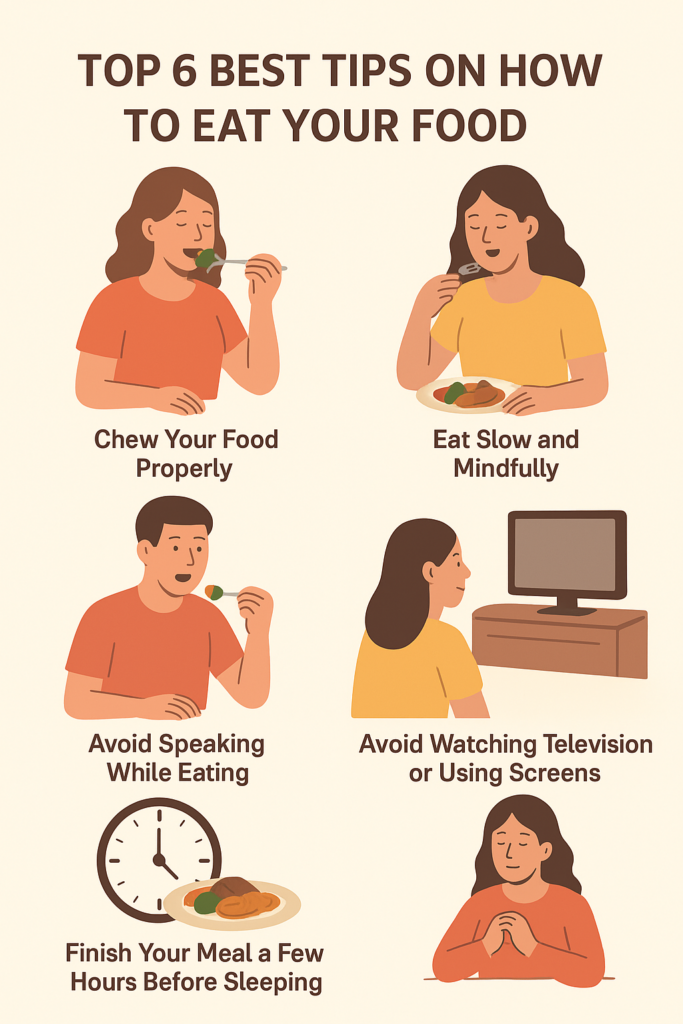
1. Chew Your Food Properly
Chewing is the first step of digestion, yet it is often overlooked. When you chew your food thoroughly, it breaks down into smaller particles, making it easier for your stomach and intestines to digest. Proper chewing also allows digestive enzymes in saliva to start working early. This reduces bloating, acidity, and indigestion. Aim to chew each bite slowly and completely until the food becomes soft before swallowing.
2. Eat Slow and Mindfully
Eating too fast can lead to overeating and poor digestion. When you eat slowly, your brain gets enough time to recognize fullness, preventing excessive calorie intake. Slow eating improves portion control and helps you enjoy the flavors of your food. Put your spoon down between bites, take deep breaths, and stay present during your meal. Mindful eating supports both physical and mental health.
3. Avoid Speaking While Eating
Talking while eating may seem harmless, but it can cause you to swallow excess air along with food, leading to gas and bloating. It also increases the risk of choking. Eating in silence or with minimal conversation helps you focus on chewing properly and eating slowly. Being attentive during meals enhances digestion and encourages better eating habits.
4. Avoid Watching Television or Using Screens
Eating while watching television or scrolling on your phone distracts your mind from the meal. This often leads to overeating because you are not aware of how much you have consumed. Distracted eating can also reduce satisfaction from food and negatively affect digestion. Create a screen-free eating environment to connect with your food and listen to your body’s hunger and fullness cues.
5. Finish Your Meal a Few Hours Before Sleeping
Eating late at night can disturb digestion and sleep quality. When you lie down immediately after eating, your body struggles to digest food properly, which may cause acidity, bloating, or discomfort. Finishing your last meal at least 2–3 hours before sleep gives your digestive system enough time to work efficiently. This habit supports better metabolism, improved sleep, and gut health.
6. Maintain a Calm and Relaxed Eating Environment
Your mental state plays a major role in digestion. Eating when stressed or rushed can interfere with digestive processes. Choose a calm environment, sit comfortably, and take a moment of gratitude before your meal. A relaxed eating atmosphere supports better digestion and helps your body absorb nutrients more effectively.
Final Thoughts
Learning how to eat your food properly is a powerful step toward better health. By chewing well, eating slowly, avoiding distractions, and respecting your body’s natural rhythms, you can improve digestion, prevent discomfort, and develop a healthier relationship with food. These simple yet effective habits, when practiced consistently, can lead to lasting wellness and mindful living.